Jesus Loves You and I m Tryin Retro SVG Review
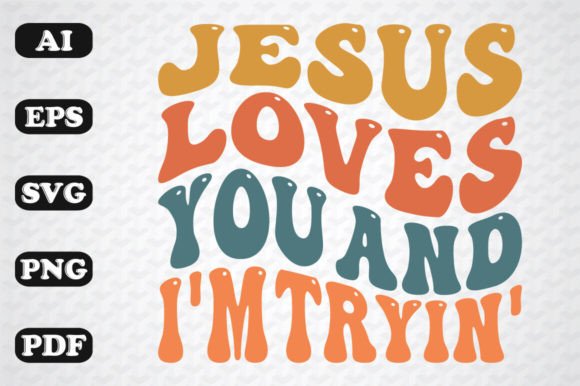
As a professional embroidery digitizer and product reviewer, I approach every new graphic with a specific question: will this actually stitch out well on fabric? When evaluating the Jesus Loves You and I m Tryin Retro SVG, my first impression is that it captures a very specific cultural moment. The retro wavy aesthetic is currently dominating the handmade market, particularly within faith-based apparel and Gen Z or Millennial Christian merchandise. However, as someone who has digitized hundreds of typography-heavy designs, I know that what looks effortless in a vector program can sometimes become a nightmare under the needle if not handled correctly.
This design falls squarely into the intersection of modern Crafts and digital Graphics. It is playful, self-deprecating, and visually balanced. But before you load this file into your machine for a client order or an Etsy listing, we need to discuss how this specific retro style translates from screen to textile. My goal here is to help you avoid puckered fabric, illegible text, and wasted stabilizer.
First Impressions and Design Personality
The layout of Jesus Loves You and I m Tryin Retro SVG relies heavily on the interaction between positive and negative space. The wavy text creates a natural frame, which is excellent for center-chest placements on sweatshirts or hoodies. From a designer’s perspective, the "retro" aspect usually implies bubbly or serif fonts with varying baseline shifts. In embroidery, this is both a blessing and a challenge.
The mood is undeniably warm and approachable. It avoids the stiffness of traditional religious iconography, making it ideal for casual wear like tote bags, long sleeve tees, and tank tops. For a small business owner or creative entrepreneur, this design signals that you understand current trends while maintaining a wholesome message. It feels less like a sermon and more like a conversation, which increases buyer engagement for personalized gifts and boutique products.
Real-World Application: The Cream Sweatshirt Test
To truly evaluate this asset, let’s look at a real-life scenario. Imagine you are fulfilling a custom order for a cream-colored heavyweight sweatshirt intended as a holiday gift or church group merchandise. You want to use the Jesus Loves You and I m Tryin Retro SVG as the primary chest design.
In this context, the design performs best when treated as a mixed-media piece rather than a solid block of ink. If you were to convert the entire wavy text into dense satin stitches, the result would be stiff, bulletproof, and prone to distorting the knit fabric. Instead, I recommend interpreting the retro waves using a combination of techniques. The larger letters should utilize a fill stitch with a vintage texture or a light density tatami to maintain garment drape. The thinner connecting elements or decorative accents might work better as running stitches or even appliqué if you are working with felt or cotton layers.
For this specific sweatshirt project, the visual appeal hinges on thread color contrast. A burnt orange, mustard yellow, or muted sage green thread against cream fabric honors the retro vibe without looking costume-y. This level of intentionality is what separates a professional handmade product from a hobbyist attempt. Customers trust makers who understand that embroidery requires different handling than vinyl or sublimation.
Navigating Fabric Challenges and Hoop Sizes
While Jesus Loves You and I m Tryin Retro SVG is versatile, it demands respect regarding fabric choice. Retro wavy designs often have intricate curves and tight spacing. On textured fabrics like terry cloth or fleece, those details can get lost. If you are stitching on a plush towel or a thick hoodie, you must increase the spacing between letters or simplify the internal details of the font during the digitizing process.
Stretchy fabrics present another hurdle. Because this design likely spans a significant horizontal width, improper stabilization will cause the waves to pull inward, making the final embroidered patch look skewed. Always use a high-quality cut-away stabilizer for knits. For lighter items like baby clothes or thin tank tops, consider resizing the design. Tiny lettering in a retro script can turn into unreadable thread nests if scaled down below a certain threshold. Always check your minimum stitch height; generally, satin stitch columns should not be smaller than 1mm for clarity.
Be cautious with curved surfaces. Placing a wide, wavy design on a structured cap is risky unless you have digitized it specifically for caps with proper pull compensation. The distortion on a curved brim could make the phrase "I'm Tryin" look unintentionally crooked. For caps, I would suggest using only a portion of the design or re-digitizing the wave to follow the cap's curvature naturally.
Commercial Value and Brand Consistency
For Etsy sellers and craft business owners, consistency is currency. Using Jesus Loves You and I m Tryin Retro SVG across multiple product lines helps build brand recognition. However, you must ensure the embroidery file maintains integrity across different sizes. A design that looks perfect on an adult hoodie might fail on a baby bib due to stitch density issues.
This design has high giftability because it balances humor with sincerity. It works exceptionally well for wedding party gifts (for the bride who wants something fun), nursery decor pillows, or ministry team apparel. When creating printable mockups for your digital product previews, show the design on realistic fabric textures rather than flat white backgrounds. Buyers need to visualize the stitch texture. Demonstrating that you understand the difference between a digital graphic and a finished embroidered product builds immense customer trust.
Essential Notes for Embroidery Professionals
Before you commit this design to a commercial embroidery project or list it as a finished item, please adhere to these practical guidelines:
- Verify File Compatibility: The product description notes that files included are Ai 10. Adobe Illustrator files are vector graphics, not native machine embroidery files (like DST, PES, or JEF). You will need to digitize this SVG/AI file yourself or hire a professional digitizer to create a stitch file suitable for your specific machine.
- Test Stitch Mandatory: Never run a new design on a customer’s garment first. Test the stitch density and registration on scrap fabric that matches your final project weight.
- Check Licensing: Confirm whether your purchase includes commercial rights for selling physical embroidered items versus selling the digital embroidery file itself. These licenses are rarely interchangeable.
- Thread Color Planning: Retro designs often rely on specific color palettes. Test your thread colors in natural lighting to ensure they evoke the intended vintage mood.
- Stabilizer Selection: Match your stabilizer to the fabric, not just the design. Wavy text requires stable backing to prevent the letters from shifting during the stitch-out.
- Detail Inspection: Zoom in on the vector points before digitizing. Smooth out any jagged nodes in the AI file to ensure your satin stitches flow smoothly without unnecessary trims.
Final Thoughts for Makers
The Jesus Loves You and I m Tryin Retro SVG is a charming, culturally relevant asset that holds significant potential for apparel decorators and digital product sellers. Its strength lies in its relatable messaging and trendy aesthetic. However, its success as an embroidery project depends entirely on your technical execution. By respecting the limitations of thread and fabric, and by properly converting this vector graphic into a quality machine embroidery design, you can create beautiful, sellable goods that resonate with modern buyers. Remember, in our industry, the best design is one that survives the wash and wears comfortably. Treat this graphic with technical care, and it will serve your business well.